
The Digital Marketplace: Navigating the World of eCommerce Success
eCommerce, or electronic commerce, has fundamentally reshaped how businesses operate and how consumers shop. What began as a novel way to purchase goods online has evolved into a global, multi-trillion-dollar industry, blurring the lines between physical and digital retail. Today, eCommerce is not just about having an online store; it’s about building a robust digital presence that encompasses everything from product discovery and payment processing to logistics and customer relationship management. Understanding its nuances is crucial for any business looking to thrive in the modern marketplace.
1. The Evolution and Scope of eCommerce
From early online transactions to sophisticated global marketplaces, eCommerce has undergone a profound transformation.
From Brick-and-Mortar to Click-and-Mortar
Initially, eCommerce was seen as a separate channel from traditional retail. Now, it’s an integrated part of a larger, omnichannel strategy. Consumers expect seamless transitions between online browsing, in-store pickup, mobile apps, and social commerce. This “click-and-mortar” approach recognizes that physical and digital touchpoints complement each other.
Diverse Models and Marketplaces
eCommerce is not monolithic. It encompasses various business models:
- B2C (Business-to-Consumer): The most common model, where businesses sell directly to individual customers (e.g., Amazon, ASOS).
- B2B (Business-to-Business): Companies selling products or services to other businesses online (e.g., Alibaba, industrial suppliers).
- C2C (Consumer-to-Consumer): Individuals selling to other individuals (e.g., eBay, Etsy for craft sellers).
- D2C (Direct-to-Consumer): Brands selling directly to consumers, bypassing traditional retailers (e.g., Warby Parker, Casper). This model offers greater control over branding and customer data.
The rise of massive online marketplaces (Amazon, eBay, Etsy, Shopify) has provided smaller businesses with unprecedented access to global customer bases, while also creating intense competition.
2. Key Pillars of a Successful eCommerce Operation
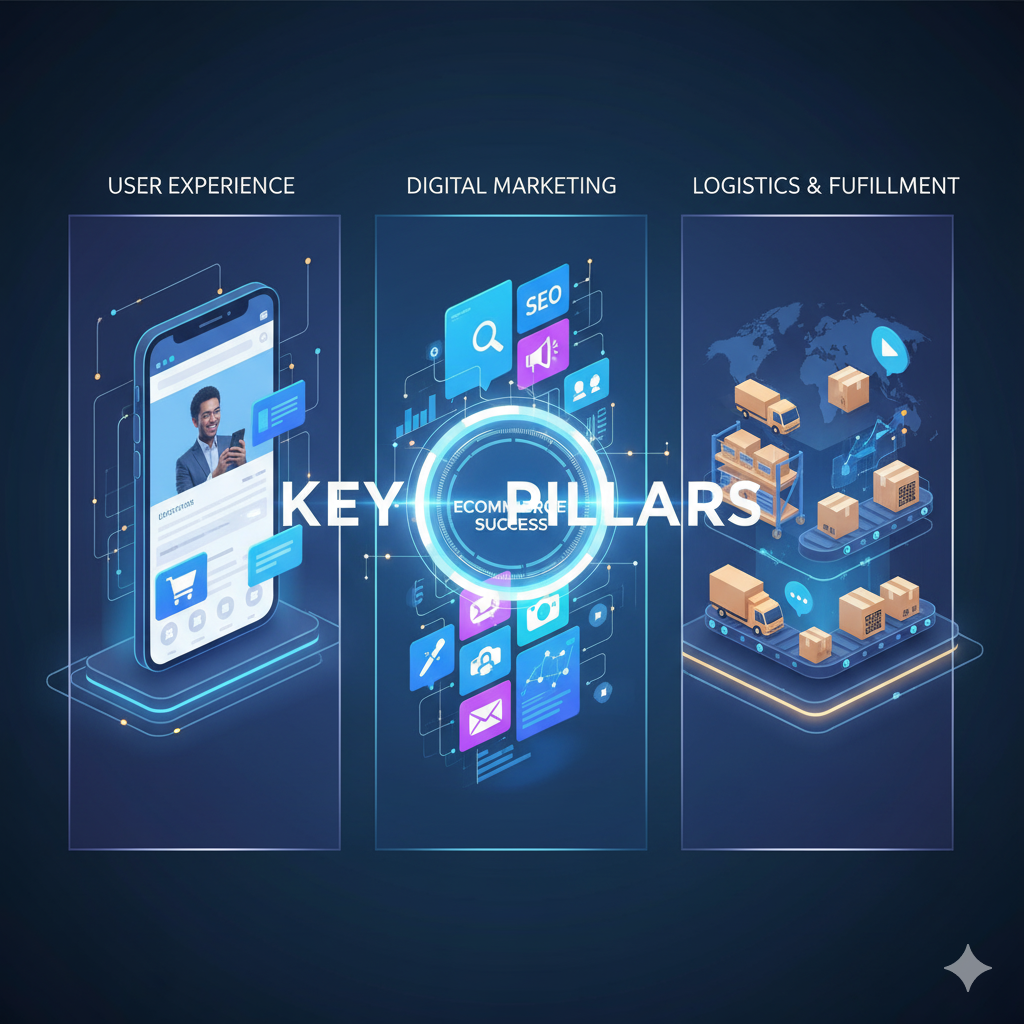
Building a thriving online store involves more than just listing products. It requires strategic planning across multiple critical areas.
A. User Experience (UX) and Website Design
Your online store is your digital storefront. Its design and functionality are paramount.
- Intuitive Navigation: Customers should easily find what they’re looking for.
- Mobile Responsiveness: A significant portion of online shopping occurs on mobile devices.
- Fast Loading Times: Slow sites lead to high bounce rates.
- Clear Product Information: High-quality images, detailed descriptions, and customer reviews build trust.
- Seamless Checkout Process: Minimize steps, offer guest checkout, and transparently display all costs.
B. Digital Marketing and Customer Acquisition
Getting traffic to your store is essential. A multi-pronged marketing strategy is key.
- Search Engine Optimization (SEO): Optimizing your site to rank higher in search results for relevant keywords.
- Paid Advertising (PPC): Running campaigns on Google Ads, social media platforms (Facebook, Instagram, TikTok) to target specific demographics.
- Content Marketing: Creating valuable blog posts, videos, or guides that attract and engage potential customers.
- Social Media Marketing: Building a community, running promotions, and engaging directly with customers.
- Email Marketing: Building an email list for newsletters, promotions, and abandoned cart recovery.
C. Logistics, Fulfillment, and Customer Service
The behind-the-scenes operations are just as important as the front-end experience.
- Inventory Management: Efficiently tracking stock to prevent overselling or stockouts.
- Shipping and Fulfillment: Choosing reliable carriers, offering various shipping options (standard, express), and clear tracking. This can be handled in-house, through a 3PL (third-party logistics) provider, or via dropshipping.
- Returns and Exchanges: A clear, easy-to-understand return policy builds customer confidence.
- Responsive Customer Support: Providing multiple channels (chat, email, phone) for assistance and resolving issues promptly.
3. Emerging Trends Shaping the eCommerce Landscape
eCommerce is a constantly evolving field. Staying abreast of new technologies and consumer behaviors is vital for sustained success.
A. Personalization and AI
Artificial intelligence (AI) is revolutionizing the customer experience by enabling highly personalized recommendations, dynamic pricing, and AI-powered chatbots for instant customer support. Machine learning algorithms analyze past purchases, browsing history, and demographic data to offer relevant products, making shopping more efficient and enjoyable for the consumer.
B. Social Commerce and Live Shopping
Social media platforms are increasingly becoming direct sales channels. Social commerce integrates the shopping experience directly within platforms like Instagram, Facebook, and TikTok, allowing users to discover and purchase products without leaving the app. Live shopping, a trend popularized in Asia, involves real-time video broadcasts where influencers or brands showcase products and interact with viewers, driving impulse purchases.
C. Sustainable eCommerce
As consumer awareness of environmental and social impact grows, so does the demand for sustainable practices. eCommerce businesses are responding by focusing on eco-friendly packaging, ethical sourcing, carbon-neutral shipping, and transparent supply chains. Brands that genuinely embed sustainability into their operations can build strong customer loyalty.
D. Augmented Reality (AR) and Virtual Reality (VR)
AR and VR are enhancing the online shopping experience by allowing customers to “try on” products virtually or visualize how items would look in their own space (e.g., furniture in a living room, makeup on a face). This reduces purchase uncertainty and can lower return rates.
4. Challenges and Considerations for eCommerce Businesses
Despite its immense growth, the eCommerce sector presents its own set of hurdles.
A. Intense Competition
The low barrier to entry for setting up an online store means intense competition. Businesses must constantly innovate, differentiate their offerings, and provide exceptional value to stand out.
B. Data Security and Privacy
Protecting customer data is paramount. eCommerce businesses must invest in robust cybersecurity measures and adhere to data privacy regulations (like GDPR and CCPA) to maintain customer trust and avoid legal penalties.
C. Supply Chain Complexities
Managing global supply chains can be challenging, particularly with geopolitical issues, natural disasters, or pandemics causing disruptions. Efficient logistics and diversified sourcing strategies are critical.
D. Customer Acquisition Costs
As the digital advertising landscape becomes more crowded, the cost of acquiring new customers online can be high. Businesses need effective strategies to retain customers and leverage organic growth channels.
5. Conclusion: The Future is Digital, Integrated, and Customer-Centric
eCommerce is no longer just an alternative; it’s a fundamental component of the global economy. Its continuous evolution demands that businesses remain agile, technologically savvy, and above all, intensely focused on the customer experience. From optimizing website design and mastering digital marketing to streamlining logistics and embracing emerging technologies like AI and AR, the path to eCommerce success is multifaceted. Businesses that prioritize a seamless, personalized, and trustworthy online journey will be best positioned to thrive in the dynamic digital marketplace for years to come.


