
Unlocking Your Potential: A Comprehensive Guide to Fitness and Exercise
Disclaimer: This article is for informational and educational purposes only and does not constitute professional medical advice, diagnosis, or treatment. Always consult with a qualified healthcare professional, such as a doctor or physical therapist, before starting any new exercise program, especially if you have underlying health conditions.
In an increasingly sedentary world, the importance of regular physical activity cannot be overstated. Fitness is not merely about achieving a certain body type; it’s about cultivating a healthier, more energetic, and resilient life. A well-rounded exercise regimen integrates various types of physical activity, each contributing unique benefits to your overall well-being. This guide will delve into the core components of fitness and explore different forms of exercise, including cardiovascular training, strength training, flexibility, and balance, providing insights for unlocking your full physical potential.
1. Defining Fitness: More Than Just Muscle
True fitness is a multifaceted concept encompassing several key components:
- Cardiovascular Endurance: The ability of your heart and lungs to supply oxygen to your muscles during sustained physical activity.
- Muscular Strength: The maximum force a muscle can exert in a single effort.
- Muscular Endurance: The ability of a muscle to perform continuous contractions without fatigue.
- Flexibility: The range of motion around a joint.
- Body Composition: The proportion of fat and non-fat mass in your body.
A holistic approach to exercise aims to improve all these areas, leading to enhanced physical performance and a reduced risk of chronic diseases.
2. The Pillars of Exercise: Cardiovascular Training
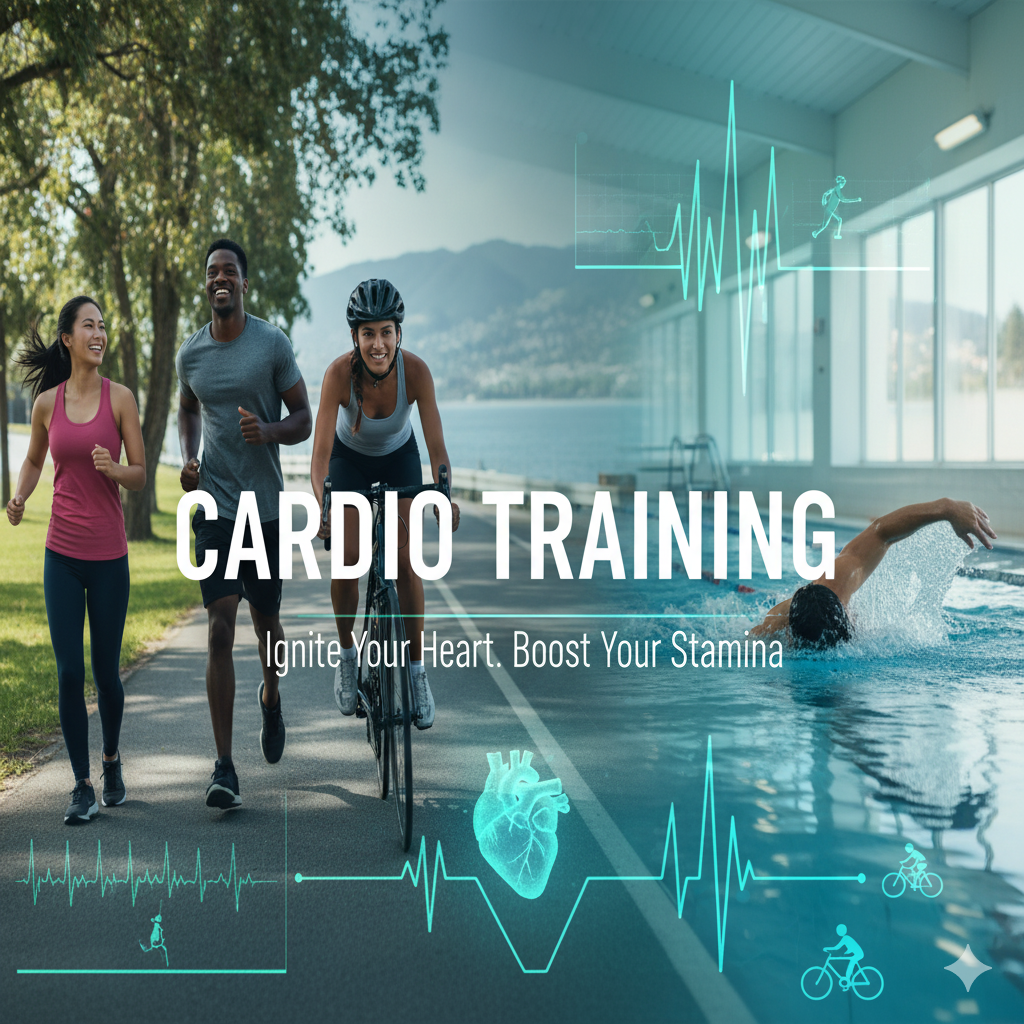
Cardiovascular, or aerobic, exercise is any activity that elevates your heart rate and keeps it elevated for a sustained period, thereby strengthening your heart and lungs.
A. Benefits of Cardio
- Heart Health: Lowers blood pressure, reduces LDL (“bad”) cholesterol, and improves overall cardiovascular function.
- Weight Management: Burns calories and helps reduce body fat.
- Improved Stamina: Increases your endurance for daily activities and other forms of exercise.
- Mood Enhancement: Releases endorphins, acting as a natural mood booster and stress reducer.
B. Types of Cardio Exercise
- Low-Impact Aerobics: Walking, cycling, swimming, elliptical training. These are gentle on the joints and suitable for beginners or those with joint issues.
- High-Impact Aerobics: Running, jumping jacks, plyometrics. These are more intense and can build bone density but carry a higher risk of joint stress.
- Interval Training (HIIT): High-Intensity Interval Training involves short bursts of intense exercise followed by brief recovery periods. HIIT is highly effective for burning calories and improving cardiovascular fitness in less time.
- Group Fitness Classes: Spinning, Zumba, dance aerobics offer a fun, social, and structured way to get your cardio in.
C. Recommendations for Cardio
Aim for at least 150 minutes of moderate-intensity aerobic activity or 75 minutes of vigorous-intensity aerobic activity per week, or a combination of both.
3. Building Strength: Resistance Training
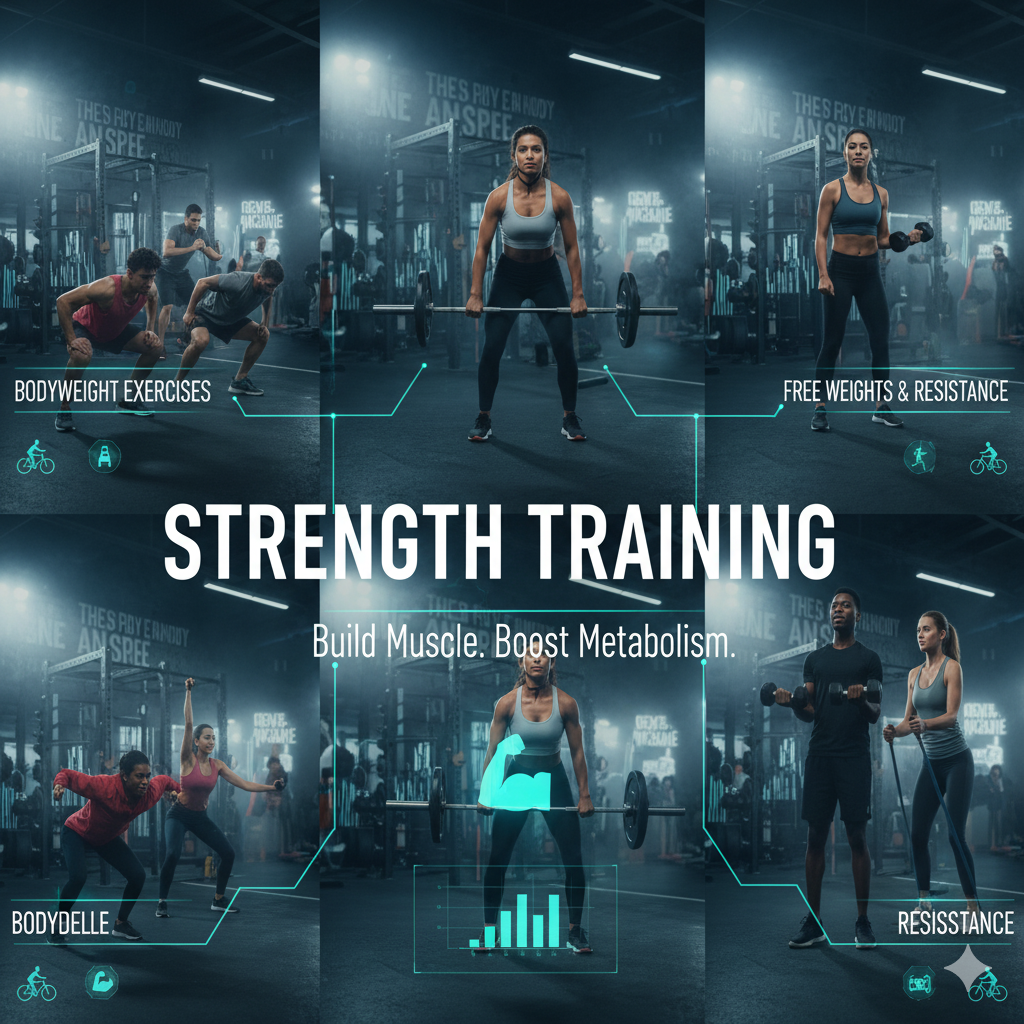
Strength training, also known as resistance training, involves using resistance (such as weights, resistance bands, or your own body weight) to build muscle mass, strength, and endurance.
A. Benefits of Strength Training
- Increased Muscle Mass: Boosts metabolism, as muscle burns more calories at rest than fat.
- Bone Health: Increases bone density, reducing the risk of osteoporosis.
- Improved Functional Strength: Makes everyday tasks easier and reduces the risk of injury.
- Better Body Composition: Contributes to a leaner physique.
- Enhanced Athletic Performance: Crucial for most sports and physical activities.
B. Types of Strength Training
- Bodyweight Exercises: Push-ups, squats, lunges, planks. Excellent for beginners and can be done anywhere without equipment.
- Free Weights: Dumbbells, barbells, kettlebells. Offer a wide range of motion and engage stabilizing muscles.
- Resistance Bands: Versatile and portable, providing resistance for various exercises.
- Weight Machines: Offer guided movements, making them good for beginners to learn form and isolate specific muscles.
- Compound vs. Isolation Exercises: Compound exercises (e.g., squats, deadlifts, bench presses) work multiple muscle groups simultaneously, while isolation exercises (e.g., bicep curls, tricep extensions) target single muscles. A balanced program includes both.
C. Recommendations for Strength Training
Aim for 2-3 strength training sessions per week, targeting all major muscle groups.
4. Enhancing Mobility: Flexibility and Balance
Beyond cardio and strength, flexibility and balance are often overlooked but are integral to overall fitness and injury prevention.
A. Flexibility
- Benefits: Improves range of motion, reduces muscle stiffness, prevents injuries, and can alleviate post-exercise soreness.
- Types: Static stretching (holding a stretch for 20-30 seconds), dynamic stretching (controlled, fluid movements), and PNF (Proprioceptive Neuromuscular Facilitation) stretching.
- Activities: Yoga, Pilates, dedicated stretching routines.
B. Balance
- Benefits: Crucial for preventing falls, especially as we age, and enhances coordination for sports and daily activities.
- Types: Standing on one leg, heel-to-toe walking, using balance boards or stability balls.
- Activities: Tai Chi, yoga, Pilates, specific balance drills.
C. Recommendations for Flexibility & Balance
Incorporate flexibility exercises 2-3 times per week, and balance exercises regularly, especially if you are prone to falls or participate in sports requiring good balance.
5. Integrating Exercise into Your Life: Sustainable Strategies
The key to long-term fitness is consistency and enjoyment.
- Set Realistic Goals: Start small and gradually increase intensity or duration.
- Find Activities You Enjoy: If it feels like a chore, you won’t stick with it.
- Vary Your Routine: Prevent boredom and challenge different muscle groups.
- Listen to Your Body: Rest when needed and don’t push through pain.
- Consistency is Key: Even short, regular workouts are more effective than sporadic intense sessions.
6. Conclusion: A Journey, Not a Destination
Fitness is a lifelong journey of self-improvement and self-care. By understanding the different components of fitness and incorporating a variety of exercises—from heart-pumping cardio and muscle-building strength training to flexibility and balance work—you can unlock a more vibrant, healthy, and capable version of yourself. Remember, the goal is not perfection, but progress and sustained well-being. Consult with a healthcare professional to tailor an exercise plan that best suits your individual needs and health status.
Tools


